

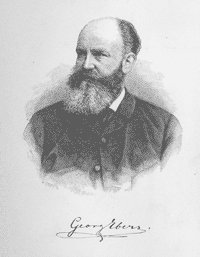
 In 1872, a German Egyptologist named Georg Ebers discovered an ancient Egyptian papyrus (the Ebers Papyrus) that outlined what constituted the Web MD of the ancient world.
Altogether, the papyrus contains 811 prescriptions for what ails you, including “salves, plasters, and poultices; snuffs, inhalations, and gargles; draughts, confections, and pills; fumigations, suppositories, and enemata,” wrote Cyril Bryan of the Ebers Papyrus in “The Ancient Egyptian,” published in 1930.
The ancient Egyptians were renowned in the ancient world for their progress in the field of medicine.
During the days of in the Medo-Persian Empire, the ancient historian Herodotus recorded that it was king Darius’ practice “to keep in attendance certain Egyptian doctors, who had a reputation for the highest eminence in their profession.”
Could the amazingly advanced medical knowledge reflected by the Pentateuch have come from Moses’ Egyptian education?
In ancient Egypt, if you went to the doctor for a splinter, he would write you out a prescription for a poultice consisting of “worm blood, mole and donkey dung.”
Of course, if you followed that prescription, the tetanus spores in the donkey poop would probably result in an agonizing death from lockjaw.
Got pimples? The Egyptian free clinic prescribes a poultice made of “a hog’s took, cat dung, dog dung, aau-of-samu-oil, berries-of-the-xet-plant,” which the patient is to “pound and apply as a poultice” to their skin.
Various other ingredients recorded by “<i>The Ancient Egyptian</i>” for the plethora of remedies concocted included “dried excrement of a child” (p. 98), “hog dung” (p. 115), and “a farmer’s urine” (p. 131).
One recipe to prevent hair growth included lizard dung and the blood from a cow, donkey, pig, dog, and stag (p. 102).
Let’s face it. The active ingredient in most of these Egyptian prescriptions is animal poop. And ancient Egypt is reputed to have had the most advanced medical knowledge in the world at that time.
For three thousand years, when medical ‘science’ wasn’t advocating better living through the liberal application of poop, it recommended blood-letting as a way to allow diseases to leave the body.
Blood-letting was considered a legitimate medical treatment until the early 20th century.
An eyewitness account of George Washington’s death relates that he came down with a chill, and in an effort to cure him, those who attended him resorted to bloodletting; “a vein was opened, but no relief afforded.” (“The Death of George Washington,” 2001).
We know now that bloodletting was exactly the wrong treatment, regardless of the malady.
Victims of a traumatic injury are given glucose IV’s to strengthen the blood and prevent the patient from going into shock.
Thousands of years before the lethality of blood-letting was discovered, mankind had been informed by God that blood was the key to life. In Leviticus 17:11, Moses wrote: “For the life of the flesh is in the blood.”
How could Moses have known almost 3,500 years ago that life was in the blood, something it took the rest of the scientific and medical community thousands of years to discover?


